Seamlessly Migrate from iCloud to Cloud Storage While Keeping Apple Ecosystem Connected

Why Your Business Might Consider Alternative Cloud Solutions
We understand the pull toward exploring alternative cloud storage solutions. Whether you're seeking different pricing structures, expanded collaboration features, or simply want to diversify your digital infrastructure, migrating away from iCloud doesn't mean abandoning what makes your Apple devices work beautifully together. Our ecosystem is designed to adapt, and we're here to walk you through this transition with clarity and confidence.
Your needs evolve, and sometimes iCloud's standard features don't align perfectly with your workflow. Maybe you need deeper integration with Windows machines across your organization, or perhaps you're drawn to a provider offering larger storage tiers at different price points. Some teams benefit from advanced collaboration tools or industry-specific compliance certifications that third-party services specialize in.
The important reality: moving to Google Drive, Dropbox, OneDrive, or similar platforms is entirely feasible while preserving the interconnected experience you've built across your iPhone, iPad, and Mac. Your Apple devices remain just as capable and responsive. We've built our hardware and software to play nicely with the broader digital ecosystem, and that flexibility is one of our core strengths.
Your first action: Audit which services you actually use. List out iCloud Drive, Photos, Mail, and any other features you rely on daily. This clarity prevents surprises mid-migration.
Understanding What You'll Gain and What Requires Planning
Switching cloud providers opens doors to different organizational systems, sharing capabilities, and pricing models. You might gain seamless folder structures that sync across Windows and Mac devices, or real-time collaboration features that feel more natural for your team's rhythm. Some alternatives offer unlimited storage or cost-effective family plans that align better with your budget.
What requires planning: certain deep integrations between iCloud and your Apple devices will shift slightly. Features like iCloud Keychain syncing, Find My integration, and automatic photo library backups operate differently outside our ecosystem. Mail may need reconfiguration. Your device backups won't route through iCloud, so understanding alternative backup strategies matters.
The gain outweighs these adjustments for many users and businesses. You're trading certain convenience features for expanded flexibility and potentially better alignment with your technical environment.
What to do next: Identify which iCloud features matter most to you. Prioritize Photos, Documents, and Mail. Everything else can be deprioritized in your migration plan.
Preparing Your Apple Devices Before the Transition Begins
Start by documenting your current setup. Sign into iCloud on each device (iPhone, iPad, Mac) and note what's actually syncing. Check Settings > [Your Name] > iCloud on your phone or System Settings > [Your Name] > iCloud on your Mac. Take screenshots if it helps.
Create a full backup before you make any changes. On Mac, use Time Machine. On iPhone and iPad, connect to a computer or use iCloud to back up one final time. This safety net prevents any accidental data loss during the transition.
Next, update all your devices to the latest iOS, iPadOS, and macOS versions. Newer operating systems handle third-party cloud service integration more smoothly. Check for updates under Settings > General > Software Update on your mobile devices and System Settings > General > Software Update on Mac.
Export any data you'll need immediately. If you're migrating photos, download your iCloud Photo Library to a local folder first. If you're moving documents, export them from iCloud Drive before disconnecting from iCloud sync. This creates a safe local copy while you configure your new provider.
Action step: Create a migration folder on each device labeled "Pre-Migration Backup" and store your exported files there. You'll reference these during setup.
Step-by-Step Migration Process for Documents and Photos
Documents migrate most cleanly when you move them deliberately rather than relying on automatic sync reversal. Open iCloud Drive on your Mac and select all folders you want to preserve. Drag them to your new cloud provider's folder (whether that's a Dropbox folder, Google Drive folder, or OneDrive folder on your Mac). Wait for the sync to complete before moving forward.
Photos require a separate approach since iCloud Photo Library is deeply integrated. Download your complete photo library using Apple's Data and Privacy portal or export directly from Photos app on your Mac. This can take hours for large libraries, so start this process during low-usage times. Once exported as individual image files, upload them to your new provider's photo service or organized folder structure.
For iCloud Mail, you'll need to set up your new email separately (or keep iCloud Mail active while adding new accounts). Most alternatives don't provide seamless "replace your iCloud Mail" migrations because email is tied to your Apple ID. Many users keep their iCloud Mail active for Apple services while routing personal or work correspondence through alternative providers.
Videos and other media follow the same pattern as photos: download locally first, then upload to your new service. Don't delete anything from iCloud until you've verified the files exist and are accessible in your new location.
Immediate task: Begin exporting your largest photo and video collections today, even if you're not ready to switch full services. Large migrations take time.
Maintaining Seamless Continuity Across iPhone, iPad, and Mac
Your Apple devices sync through multiple channels. Some sync through iCloud, but others use local Wi-Fi connections and your Apple ID. Continuity features, Handoff, and Universal Clipboard rely primarily on your Apple ID and Wi-Fi connectivity, not on iCloud storage specifically.
This means you can migrate your cloud storage without disrupting core continuity. Your iPhone will still communicate flawlessly with your Mac when both are on the same Wi-Fi network and logged into the same Apple ID. You'll still be able to start an email on one device and finish it on another, or copy text on your Mac and paste it immediately on your iPhone.
Keep your Apple ID active and authenticated across all devices. Your Apple ID is the spine that connects everything. As long as you're signed in consistently, your devices remain aware of each other and coordinate feature-by-feature.
Consider which files absolutely must sync across all devices instantly (calendar entries, contacts, reminders) versus which files are "reference" materials (project documents, archived photos). This distinction helps you choose which new services to enable on which devices, keeping overhead manageable.
Next step: Test your continuity features right now. Copy text on one device and paste it on another. This confirms your Apple ID authentication is functioning properly before migration begins.
Configuring Backup and Sync Settings on Each Device
On your Mac, open System Settings > General > Software Update, then navigate to iCloud settings. You'll see toggles for Photos, Mail, Reminders, Contacts, Calendars, and more. Disable iCloud Drive syncing first, then install your alternative cloud storage app (Dropbox, Google Drive, OneDrive). Configure its sync folders to match your organizational structure.
iPhone and iPad follow the same logic. Go to Settings > [Your Name] > iCloud and toggle off the services you're replacing with third-party apps. Install the new provider's app from the App Store. Configure sync settings within their app. Most cloud services let you choose which folders sync automatically and which remain online-only, saving device storage.
For backups, you have two paths: keep iCloud Backup enabled (Apple's backup service is separate from iCloud storage), or switch entirely to local Time Machine backups on Mac and manual backups on iOS devices. Many users maintain iCloud Backup for iOS devices as a safety net while moving storage to alternatives. This hybrid approach balances convenience with your preference for alternative storage providers.
Calendar and contacts deserve special attention. These sync through iCloud by default, but you can manage them through third-party CalDAV or CardDAV servers if your new provider supports those protocols. For most users, keeping these in iCloud is the simplest path, since they don't consume much storage and syncing is essential.
Actionable next step: On one device only, disable iCloud Drive and install your new provider's app. Test for 48 hours. If everything works, replicate the setup on other devices.
Setting Up Cross-Platform Access and File Management
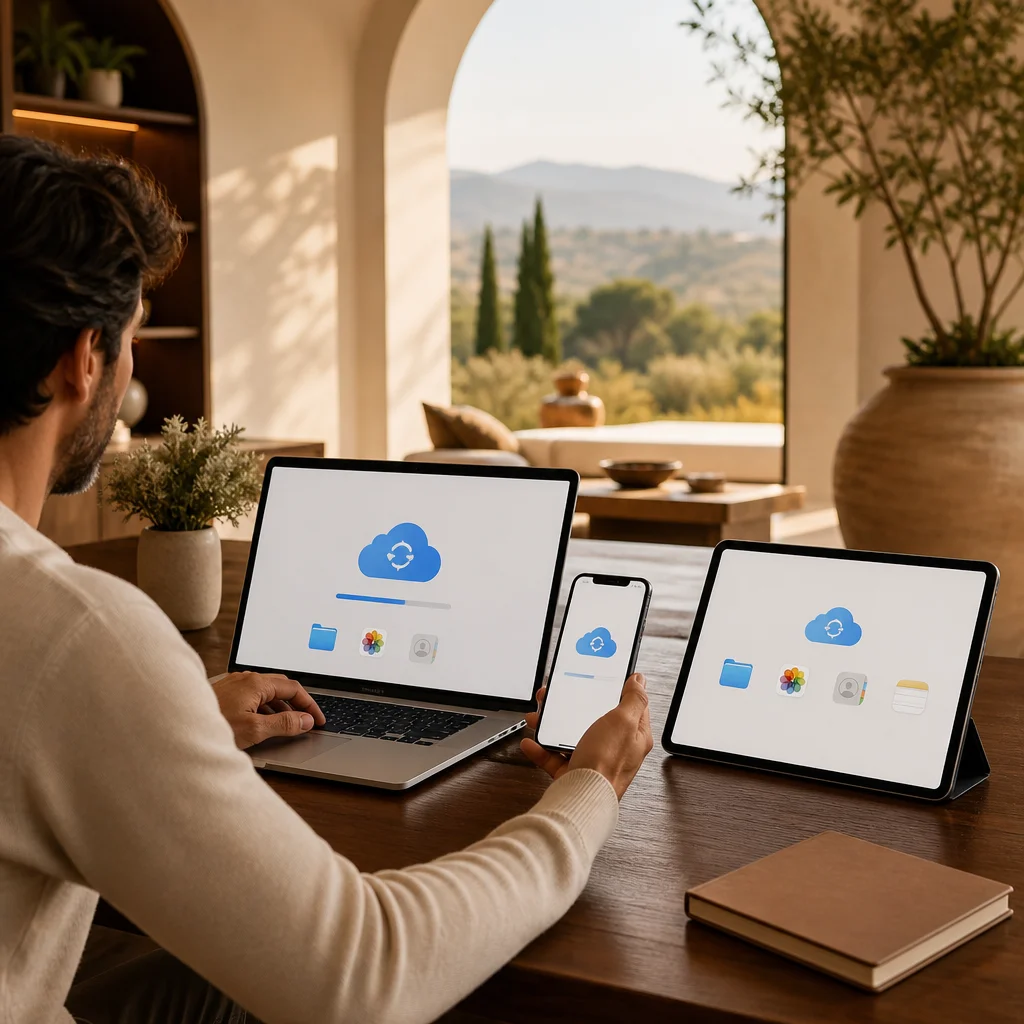
One advantage of moving beyond iCloud is accessing your files from Windows machines and web browsers more seamlessly. Configure folder structures in your new provider that make sense across platforms. Use consistent naming conventions without special characters that cause issues on Windows.
Install the mobile app for your chosen provider on all your iOS and iPad devices. Apps from Dropbox, Google, and Microsoft are polished and offer better controls than web access on phones. Enable selective sync so your device doesn't download every single file, preserving storage space.
Set up the web interface so you can access files from any browser anywhere. This becomes your safety net when you're away from your devices. Test accessing a few important files from a web browser just to confirm functionality.
For shared files and collaboration, configure folder permissions and sharing settings early. If you're moving team files, clarify who has edit access versus view-only access. These settings prevent accidental overwrites and maintain document version control.
Immediate action: Create a master folder in your new cloud storage and organize it into subfolders (Work, Personal, Projects, Archive). Move your exported files into these categories before they pile up unorganized.
Preserving Handoff, Universal Clipboard, and Continuity Features
These features operate independently of your cloud storage provider. [macOS Continuity] and iOS continuity rely on your Apple ID, your devices being on the same Wi-Fi network, and Bluetooth connectivity. Switching from iCloud storage doesn't affect any of this.
Universal Clipboard, in particular, works purely through local Wi-Fi and your Apple ID authentication. You'll copy text on your Mac and paste it on your iPhone without any cloud involvement. This will function identically after your migration.
Handoff, which lets you start work on one device and resume on another, depends on your Apple ID and Wi-Fi connectivity. Again, independent of cloud storage. You can start composing an email on your Mac and finish it on your iPhone just as seamlessly post-migration.
The key to preserving these features: stay signed into your Apple ID on all devices, keep Wi-Fi enabled, and keep Bluetooth active. Make no changes to Apple ID settings during your migration. These features will hum along exactly as before.
Verification step: After your migration is complete, test Handoff by starting a task on one device and finishing it on another. This quick test confirms everything is working properly.
Optimizing Performance After Your Migration is Complete
Once your new cloud provider is active across all devices, take time to observe performance. Some cloud services sync more aggressively than others, which can affect battery life or network bandwidth. Adjust settings if needed. Disable continuous sync for large folders, or enable sync only on Wi-Fi to reduce cellular data usage.
On Mac, use Activity Monitor to check whether your new cloud provider is consuming excessive CPU resources. Occasional spikes during active syncing are normal. Constant high usage suggests misconfiguration or a need to contact the provider's support.
Review your device storage after a few days. Some apps cache files even when you've configured selective sync. Delete cached files or adjust caching settings within your new provider's app preferences.
Organize your local downloads folder and Desktop. After migration, these areas often accumulate files. A clean filesystem improves device responsiveness and reduces confusion about what exists where.
Final optimization task: Run Disk Utility on Mac (or review storage settings on iPhone/iPad) to ensure your migration didn't accidentally duplicate files or leave orphaned data behind. Clean up any duplicates immediately.
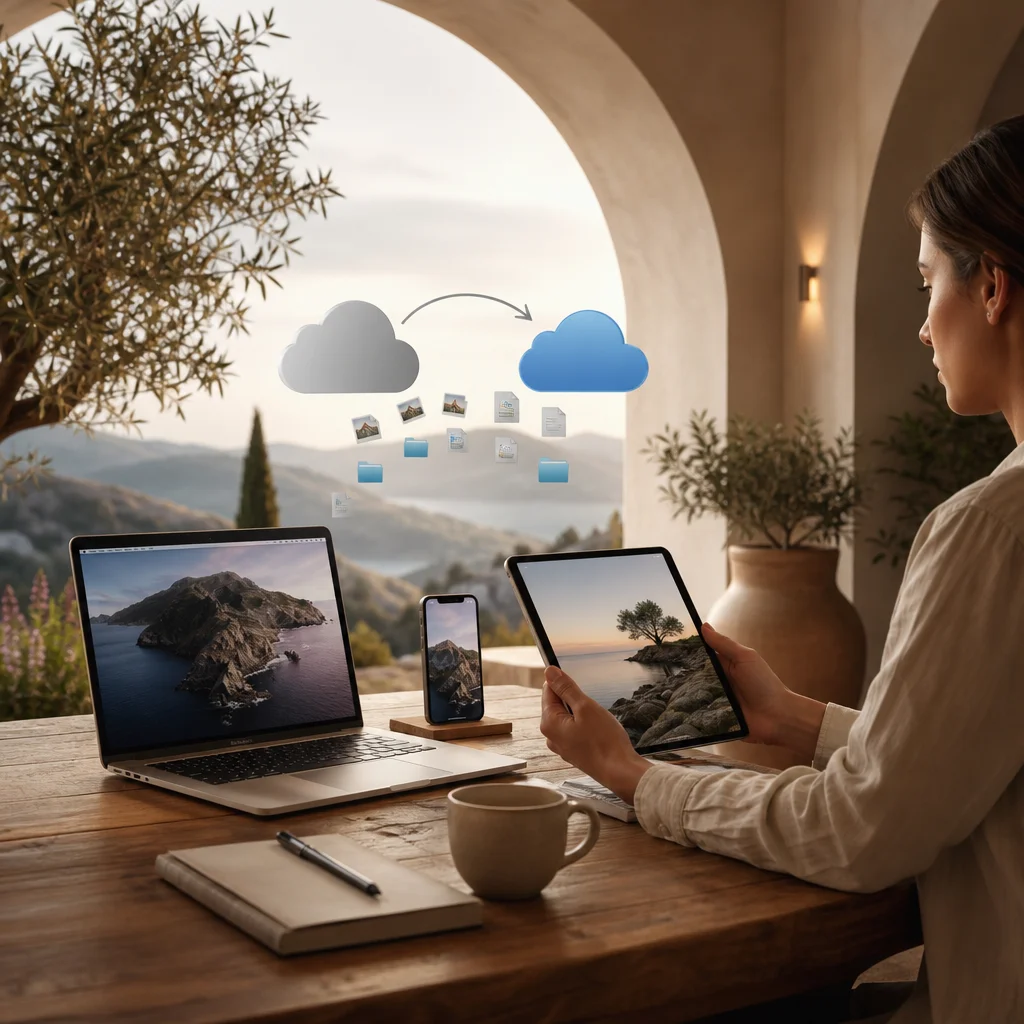
Troubleshooting Common Connection Issues During Transition
If files aren't syncing, first check whether you're on a stable Wi-Fi connection. Most cloud services pause sync on unstable networks. Restart your router and reconnect.
If a specific app won't recognize your new cloud storage, check that you've completed the authentication process within that app. Log out and log back in. Restart the app. On rare occasions, reinstalling clears configuration issues.
Mail inconsistencies often stem from IMAP settings or two-way sync confusion. If email seems duplicated or out of sync, check your mail app's settings and ensure only one service is managing each email account.
If you're seeing file conflicts or version errors, your old iCloud sync and your new provider's sync overlapped. Delete the conflicted versions and re-upload the correct file from your backup folder. This resolves almost all conflicts.
Calendar or contact sync failures usually trace back to authentication expiring. Sign out and sign back into the affected app or service.
Troubleshooting action: Keep your local backup folder accessible for the first two weeks post-migration. If something breaks, you can restore from your exported files quickly and try again.
Best Practices for Ongoing Management and Security
Establish a naming convention for your files and folders before they proliferate. Consistency matters more as your ecosystem grows. Use dates (2026-01-15) and descriptive names. Avoid vague labels like "Final_Draft_REAL" or "Version5.5."
Enable two-factor authentication on your new cloud provider account. Most support this security feature. It's your strongest defense against unauthorized access, second only to a strong, unique password.
Review sharing settings monthly. Over time, you might share folders with collaborators who later leave projects or organizations. Audit permissions and remove access for people who no longer need it.
Keep your devices updated. Security patches frequently address cloud sync vulnerabilities. Updates also improve compatibility between your devices and third-party cloud services.
Back up your backup. We recommend maintaining a separate copy of truly critical files outside your cloud ecosystem entirely. An external hard drive or secondary cloud service (different provider) provides insurance against any single point of failure.
Review your device's connected apps and services every few months. Revoke access for cloud apps you no longer use. This reduces security exposure and clears notification clutter.
Final best practice step: Schedule a quarterly audit of your cloud organization. Spend 30 minutes checking folder structures, deleting truly unnecessary files, and confirming permissions are still correct. This prevents your system from becoming unmanageable.
---
Migration from iCloud to alternative cloud storage is entirely achievable while preserving everything that makes your Apple ecosystem powerful. Your devices will continue communicating seamlessly, your continuity features will work perfectly, and you'll gain the storage flexibility you're seeking. Start with careful preparation, move methodically through each phase, and don't hesitate to reference our guidance if questions arise during your transition.
For further reading: macOS Continuity.