How Apple's Smart Ecosystem Automations Connect Your Entire Digital Life
The Connected Life You Deserve: Why Device Silos Limit Your Potential
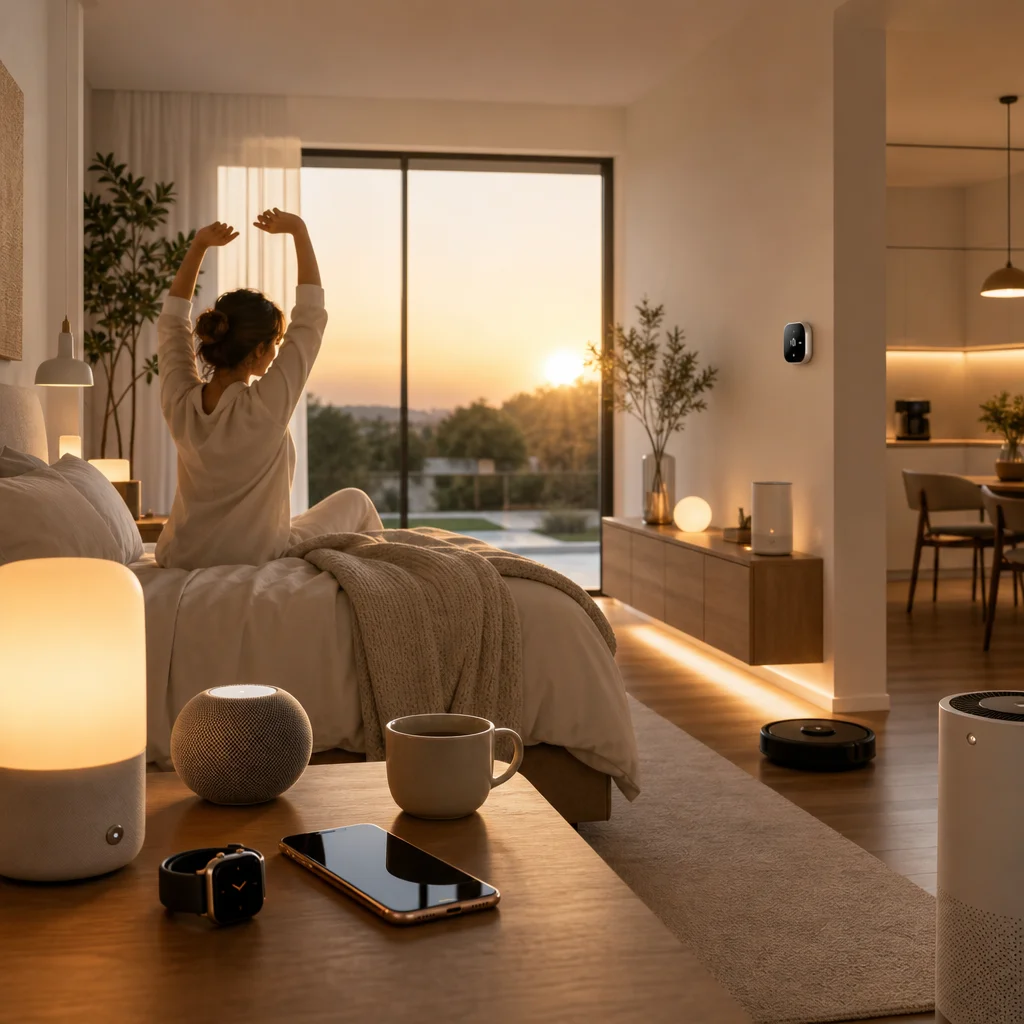
Imagine waking up to a home that already knows what you need. Your lights brighten gradually, your coffee brews, your calendar appears on your bedside table, and your favorite morning playlist starts playing, all because your devices are talking to each other seamlessly. That's the promise of a truly connected digital life, and we believe every person deserves it.
When devices don't work together, your day fragments into frustrating moments. You grab your phone to check something, then switch to your Mac, then your tablet, and suddenly you're managing three different versions of your tasks and information. It's exhausting and counterproductive. We've engineered our ecosystem to eliminate that friction entirely.
The devices you own should amplify your capabilities, not complicate them. Our unified approach means your iPhone, Mac, iPad, Apple Watch, and smart home work as a single intelligent system. When this happens, automations become possible—and with them, genuine freedom from repetitive, manual tasks. You're not just buying hardware; you're building a personal assistant that understands your habits and anticipates your needs.
Action takeaway: Audit how many devices you currently use throughout your day and note where you repeat the same actions. These friction points are where automations will deliver the biggest impact.
How Fragmented Ecosystems Create Friction Across Your Day
Operating across disconnected devices feels like juggling while riding a bicycle. Your notification lands on your phone, but the relevant file is on your computer. You want to share something from your Mac with your tablet, but the process requires multiple steps and conversions. You receive a call on your watch but can't easily transition that conversation to your phone for a more detailed discussion.
These friction points accumulate. A professional might spend 30-40 minutes daily just managing device handoffs, syncing information, and re-entering data across platforms. A student might forget to transfer notes from one device to another, losing continuity in their work. A parent attempting to set up smart home controls feels overwhelmed by incompatible apps and confusing protocols.
Fragmented ecosystems also create security and privacy concerns. When devices aren't designed to work together natively, information travels through third-party services, cloud syncing layers, and multiple authentication systems. Each transition point is a potential vulnerability. You end up trusting your data to countless platforms instead of a single, carefully designed architecture.
The real cost isn't time or frustration alone, it's lost opportunity. When you're distracted by device management, you can't focus on what matters, whether that's creative work, family time, or meaningful business goals.
Our Unified Approach: One Ecosystem, One Experience
We've spent decades building an ecosystem where every device speaks the same language. Your iPhone isn't separate from your Mac, your watch, your home, or your car. They form a coordinated system that handles complexity behind the scenes so you experience simplicity.
This unified approach rests on three pillars. First, our custom silicon across devices—from the A16 chips in iPhone to our M4 processors in Mac—ensures consistent performance and shared architectural intelligence. Second, our software stack from iOS through macOS to watchOS shares fundamental design principles and capabilities. Third, and most importantly, our privacy-first framework means all this intelligence happens on your device, not on distant servers.
When devices are truly integrated, magic happens. Your location awareness automatically adjusts your home settings as you approach. Your watch recognizes your voice and can relay urgent messages to your phone and Mac simultaneously. Your Mac can instantly continue work you started on your iPad. Your car knows your preferences and adjusts itself as you approach.
We've also made accessibility core to this integration, not an afterthought. Automations aren't just for power users who love complexity, they're for everyone, including people with disabilities who benefit most from devices that reduce friction and anticipate needs.
iPhone as Your Command Center: Initiating Automations Everywhere
Your iPhone is the hub of your connected life. It's always with you, always aware of context, and increasingly intelligent about what you need next. With Apple Intelligence, your iPhone understands your patterns and can trigger automations across your entire ecosystem based on your actual behavior.
Here's what becomes possible. You arrive at your office, and your iPhone detects location and time context, then automatically adjusts your home security, silences notifications, launches your work apps, and sends a message to your team that you're available. The entire sequence happens without you lifting a finger. You can create automations that activate based on time, location, people nearby, weather conditions, or specific app usage.
The Shortcuts app is where true power emerges. You can build multi-step automations that span multiple devices and services. Imagine a "Family Dinner" automation that dims lights, silences work notifications across all devices, locks your Mac, and sets a table reminder on your iPad, all triggered by a single voice command or arrival at home.
Action takeaway: Open the Shortcuts app on your iPhone today and explore the "Automation" tab. Start with one simple location-based automation, like turning on a "Do Not Disturb" when you arrive at work.
Apple Watch Becomes Your Wrist-Based Control Hub
Your Apple Watch is where automation becomes tactile and immediate. Unlike your phone, which you check intermittently, your watch is always visible and always aware. We've designed it to be your first point of interaction for the most important automations.
From your wrist, you can trigger complex home automations, answer or redirect calls, control your car, and receive intelligent notifications that actually mean something. When you're deep in work and your watch notifies you about an upcoming meeting, that notification can do more than inform you. It can suggest you wrap up in the next 10 minutes, move your commute time to your calendar, and prepare your car for departure. Your watch isn't just telling you information, it's suggesting action.
The Apple Watch SE in 44mm or 40mm offers an exceptionally capable foundation for this level of integration at an accessible price point. Thread technology means your watch can communicate with HomeKit devices even when your iPhone isn't nearby, extending your control range dramatically.
We've also prioritized accessibility here. Voice Control on Apple Watch has evolved to understand natural speech patterns and can trigger complex automations without requiring you to remember exact phrases. If you have limited mobility, your watch becomes extraordinarily powerful for controlling your environment.
Seamless Car Integration Through Apple CarPlay and Intelligence
Your car shouldn't require you to learn a new interface or fumble with unfamiliar controls. With Apple CarPlay and our latest advances in car integration, your vehicle becomes an extension of your ecosystem, automatically adapting to your needs based on context and habit.
When you approach your car, it recognizes you and adjusts seat position, mirrors, climate, and audio preferences automatically. During your drive, your intelligence systems proactively guide you, offering routing suggestions based on traffic patterns you typically avoid, alerting you to messages from contacts you prioritize, and offering podcasts or music aligned with your driving context.
Safety is paramount. Your automations respect driving context, automatically filtering notifications and enabling hands-free control through voice and gesture. When you're driving, your phone's display darkens to reduce distraction, critical messages break through anyway, and your watch understands you're in motion and adjusts its interaction patterns.
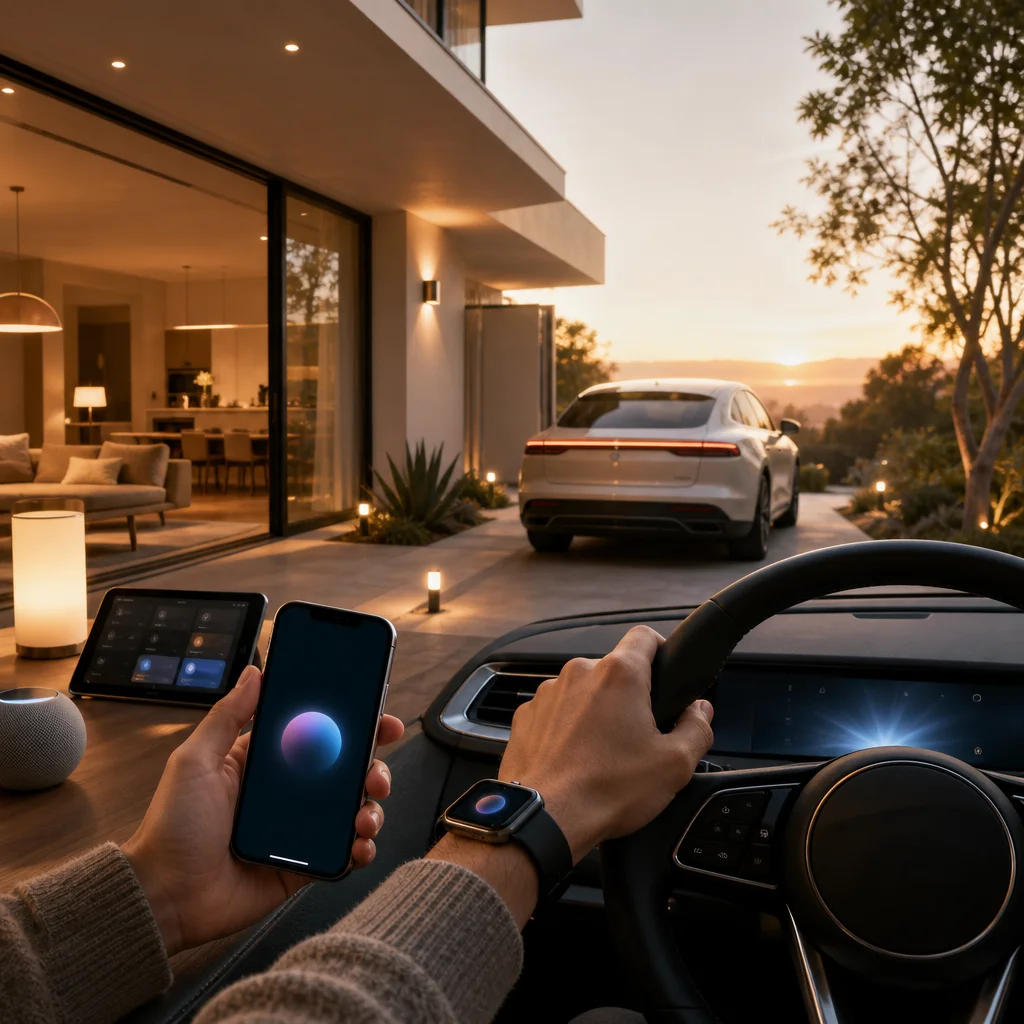
The seamless handoff means when you arrive at your destination, your navigational context, meeting details, and communication threads continue uninterrupted on your iPhone or Mac.
Smart Home Mastery With HomeKit and Thread
Your home is perhaps the most personal space where automations deliver transformative impact. With HomeKit and Thread technology, we've built a smart home system that respects your privacy while delivering genuine intelligence.
Thread creates a mesh network where devices communicate directly with each other without relying on cloud servers or a central hub. This means faster response times, better reliability, and complete privacy. Your home automations never leave your home unless you explicitly choose cloud features.
Create automations that make your home feel alive. When you approach home in the evening, lights gradually brighten, your favorite music starts, and your thermostat adjusts to your preferred comfort level. When everyone leaves, your home locks down completely, climate controls adjust for efficiency, and security cameras activate. When family members arrive at different times, each person experiences a customized home environment based on their preferences.
Accessibility integrations here are particularly powerful. Someone with limited mobility can voice-control their entire home environment. Someone who's hard of hearing can receive visual notifications when motion is detected. Someone with anxiety can set automations that create a calming environment on demand.
Accessibility Features That Anticipate Your Needs
Accessibility in our ecosystem isn't about accommodating limitations, it's about intelligent design that benefits everyone. We build accessibility into automations from the ground up, ensuring they're usable by people with diverse abilities.
Voice Control lets anyone control their devices and smart home using natural speech, essential for people with mobility challenges but valuable for anyone's hands-free interaction. Live Captions work in real time across phone calls and video, benefiting those who are deaf or hard of hearing while helping anyone in noisy environments. Eye Tracking allows full device control through eye movement alone, combined with voice commands.
Automations become profoundly useful when they're accessible. Imagine someone with arthritis creating a "good morning" automation that starts their day with a single voice command, replacing dozens of manual taps and swipes. Or someone who's blind using automations combined with VoiceOver to orchestrate their entire home and device ecosystem through natural commands.
We continuously push what's possible, treating accessibility not as a feature category but as a requirement that makes everything work better for everyone.
Real-World Scenarios: Automations That Simplify Your Routine
Let's ground this in actual life. Sarah is a freelance designer juggling multiple client projects. Her morning automation arrives at her studio, detects her presence, and launches her project management app, restarts her render queue from yesterday, opens her communication tools, and displays her priority task list on her Mac, all while her watch reminds her of her first client call in 90 minutes. She saves 15 minutes of setup daily.
Marcus is a father with two kids. His "School Run" automation detects when he and the kids are in the car, silences all notifications, initiates a playlist everyone enjoys, reminds the kids about lunch money, and alerts his spouse to when he'll be home. One command handles the entire sequence.
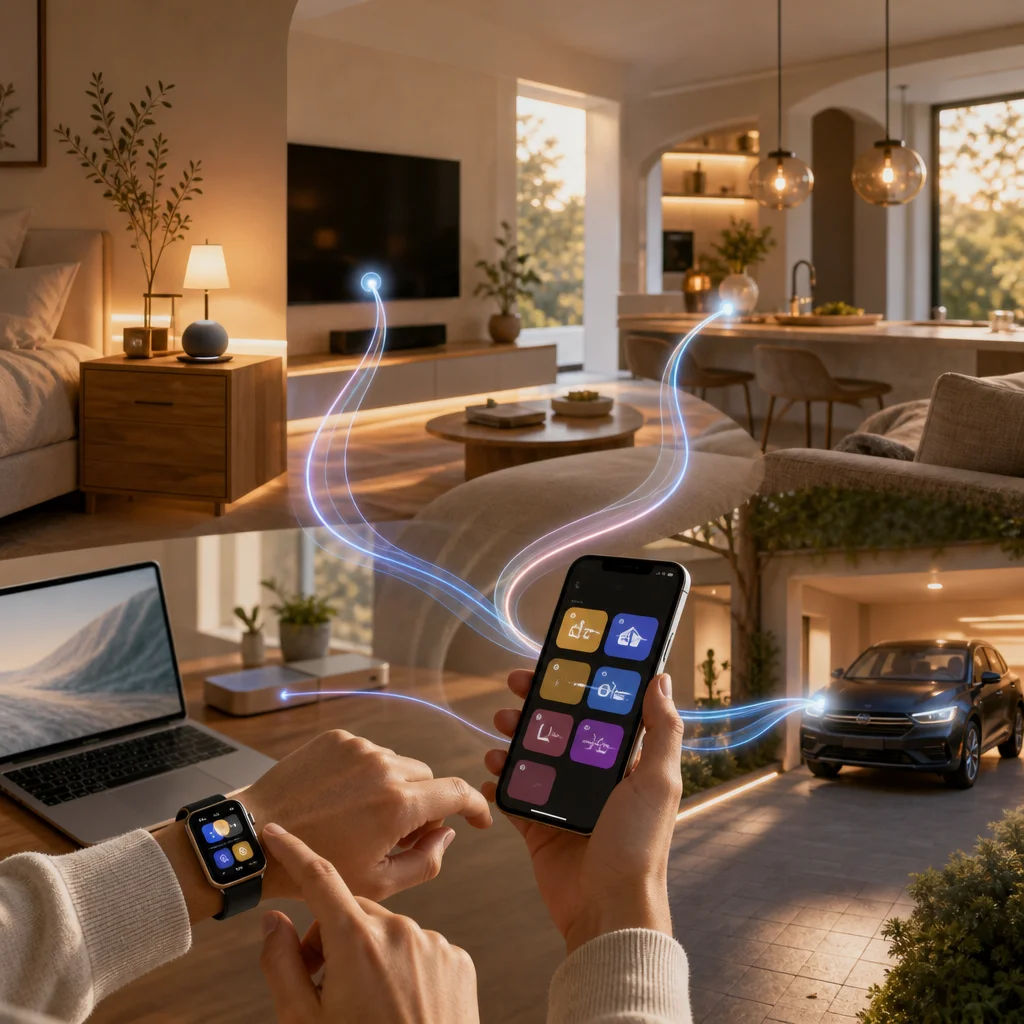
Elena has mobility challenges. Her "Help" automation, triggered by her voice, adjusts her lights for visibility, unlocks her front door for caregivers, sets her communication app to a larger display, and notifies her emergency contacts. She gains independence and safety simultaneously.
These aren't theoretical scenarios, these are patterns we see across our user base daily. The specifics vary, but the principle holds: automations eliminate repetitive decision-making and physical actions, freeing you for what matters.
Action takeaway: Write down one daily routine that feels repetitive or requires multiple device interactions. That's your target for your first meaningful automation.
Privacy and Security Built Into Every Automation
We won't compromise your privacy for convenience. Every automation, no matter how sophisticated, operates under strict privacy guardrails that we've designed into our architecture itself.
Most automations run entirely on your device. Your location history never leaves your iPhone. Your voice commands stay local unless you explicitly opt into cloud features. Your home automations never transit through Apple's servers. This on-device processing means instantaneous response, zero latency, and complete transparency about what data is being processed.
When automations do use cloud services, encryption ensures your data remains incomprehensible to anyone except you and intended recipients. Your Apple Intelligence features use on-device processing for sensitive operations like understanding your personal context, email reading, and notification filtering.
We've also designed automations to be auditable. You can see exactly which automations exist, what permissions they have, and which devices they control. You maintain absolute authority to revoke access or delete automations anytime.
This privacy-first approach actually enhances security. When your automations don't require constant cloud syncing or third-party service integrations, there are fewer attack surfaces and fewer points where your data could be exposed.
Getting Started With Your First Ecosystem Automation
Begin simple. Pick one moment in your day that feels repetitive or requires switching between devices. Maybe it's your bedtime routine, your work commute, or your lunch break.
Open the Shortcuts app on your iPhone and explore the automation templates. You'll find hundreds of pre-built automations you can customize with minimal effort. Start with time-based or location-based automations rather than complex conditional logic.
Consider which other devices are relevant to your chosen automation. Does your Mac need to be involved? Your Apple Watch? Your home? Our ecosystem excels when automations coordinate multiple devices, but starting with two-device automation is perfectly reasonable.
Test your automation several times before relying on it. Refine the sequence if needed. Once it works reliably, add another automation to a different part of your routine. Build gradually rather than attempting to automate your entire life simultaneously.
We're here to support your journey. Visit our support resources to explore tutorials, troubleshooting, and advanced automation patterns. Our ecosystem is designed to become more helpful the more you engage with it, and that's exactly what we intend: technology that grows with your needs and learns from your patterns, all while keeping your privacy and control absolute.