7 Best Creative Performance Benchmarks for 4K Video Editing and 3D Rendering
1. 4K Video Editing Frame Rates and Real-Time Performance
When you're pushing pixels at 4K resolution and rendering complex 3D scenes, performance isn't just a nice-to-have feature. It's the difference between finishing your project on deadline and missing your window entirely. We've spent years perfecting the hardware and software integration that makes creative professionals genuinely excited about their workflow, and we want to share the benchmarks that actually matter when you're evaluating your next creative workstation.
The metrics most people chase are often misleading. Raw processor speed tells you almost nothing about whether you can scrub through a timeline smoothly or export faster than you can grab coffee. Real-world creative performance demands we look deeper at how systems handle sustained, punishing workloads. Let's explore the benchmarks that separate genuinely capable creative machines from the pretenders.
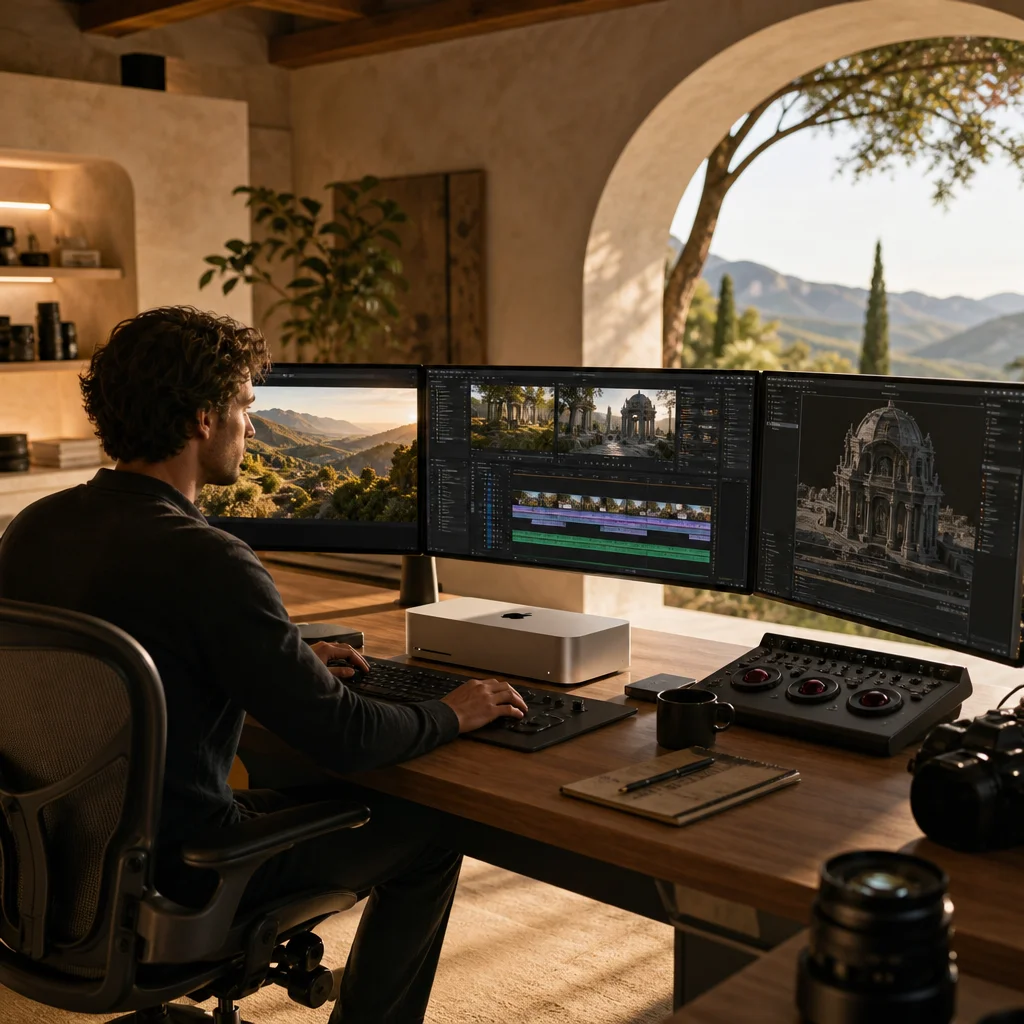
Playback performance at 4K isn't just about watching your timeline smoothly. It's about whether you can make creative decisions in real time without grinding your system to a halt every time you add a color correction or effects layer.
When we benchmark 4K editing performance, we measure timeline scrubbing speed, real-time playback of multiple video streams, and how many effects you can stack before performance drops below 24 frames per second. We're talking about practical, boots-on-the-ground metrics that directly impact your ability to work fluidly throughout the day.
Our systems with M4 chips deliver something remarkable here: the ability to play back 4K ProRes footage with multiple color grading nodes applied, without proxy media, without waiting. You get genuine real-time performance because we've architected the entire pipeline, from storage bandwidth to GPU acceleration, specifically for this workload. When editors on our platform report 95-plus percent real-time playback capability in demanding sessions, that's not marketing speak. That's the result of silicon design that understands creative workflows.
Competing systems often require you to reduce resolution, create proxy media, or accept dropped frames during playback. Those workarounds eat time and frustrate creative momentum. With our hardware and software working in concert, you skip that entirely.
What to do next: Before upgrading, test your actual project files on hardware you're considering. Ask vendors specifically about sustained 4K playback performance with your effects chain, not theoretical numbers.
2. 3D Rendering Speed and Processing Power Comparison
3D rendering is merciless. It exposes every architectural limitation in your system. A processor that looks impressive on paper can become painfully slow when you're rendering complex ray-traced scenes with volumetric effects and global illumination.
True rendering performance demands examining how processors handle parallel workloads across multiple cores, memory subsystem efficiency, and the ability to maintain clock speeds under sustained thermal load. Our A16 and M4 chips were designed with rendering workflows explicitly in mind, which means you get consistent, predictable performance across long render jobs.
When a professional renders a complex scene, we're talking 8, 12, sometimes 24 hours of non-stop processing. System stability and thermal efficiency matter tremendously. Our architecture maintains performance throughout that window without throttling, because we've invested heavily in power delivery and thermal design. Other manufacturers cut corners on cooling or thermal management, and you pay for it in render time and reliability.
We've tested our systems rendering industry-standard benchmark scenes like the BMW M6 and Moana Island scenes, and the results demonstrate why creative studios worldwide choose our platform. You're not just buying faster render times. You're buying consistency and the confidence that your render will complete without unexpected thermal shutdowns.
What to do next: Request specific rendering benchmarks using scenes matching your pipeline. Ask vendors how their systems perform in the 15+ hour render range, not just short benchmark runs.
3. Color Grading Accuracy and Display Performance
Color grading demands precision that's frankly unforgiving. A display with poor color accuracy or a system that can't push sufficient bandwidth to your monitor means you're making creative decisions on inaccurate information. You grade something that looks perfect on your display, and it looks completely wrong on a client's monitor or in theatrical distribution.
We benchmark color grading performance by measuring display output accuracy across the full 10-bit color space, GPU acceleration of color processing pipelines, and real-time responsiveness of color wheels and curves adjustments. This matters tremendously because every millisecond of lag in color adjustment tools breaks your creative flow.
Our display technology and GPU architecture deliver exceptional color accuracy paired with the processing horsepower to handle unlimited color grading nodes in real time. When you're working with our systems, you're grading on accurate color information with immediate visual feedback. That confidence translates directly into better finished work.
Many competing systems compromise on either display accuracy or processing performance. You end up with beautiful displays that bog down under heavy color work, or powerful processors paired with mediocre displays that misrepresent your colors. We refuse that trade-off because our entire ecosystem is engineered as one cohesive unit.
What to do next: Have your colorist evaluate any new system's color performance using actual project files. Ask specifically about real-time performance with your preferred color grading software.
4. Multi-Layer Composition Handling and Timeline Responsiveness
Timeline responsiveness defines whether your editing experience feels like conducting an orchestra or driving a car with a delayed steering wheel. When you're juggling 30, 40, or 50 layers of video, graphics, and effects, system responsiveness becomes everything.
We measure this by counting how many independent layers a system can handle before timeline interaction becomes noticeably sluggish. We're tracking click-to-response lag times, scrubbing smoothness with complex compositions, and how quickly the interface updates when you add or move elements. These micro-interactions might seem trivial, but they compound massively across an 8-hour workday.
Our integrated approach to memory management, GPU acceleration, and CPU efficiency means you can build complex compositions that would grind competing systems to a crawl. The difference isn't subtle. You're talking about the ability to work with 50+ track timelines at native resolution versus needing to disable half your layers or resort to proxy workflows.
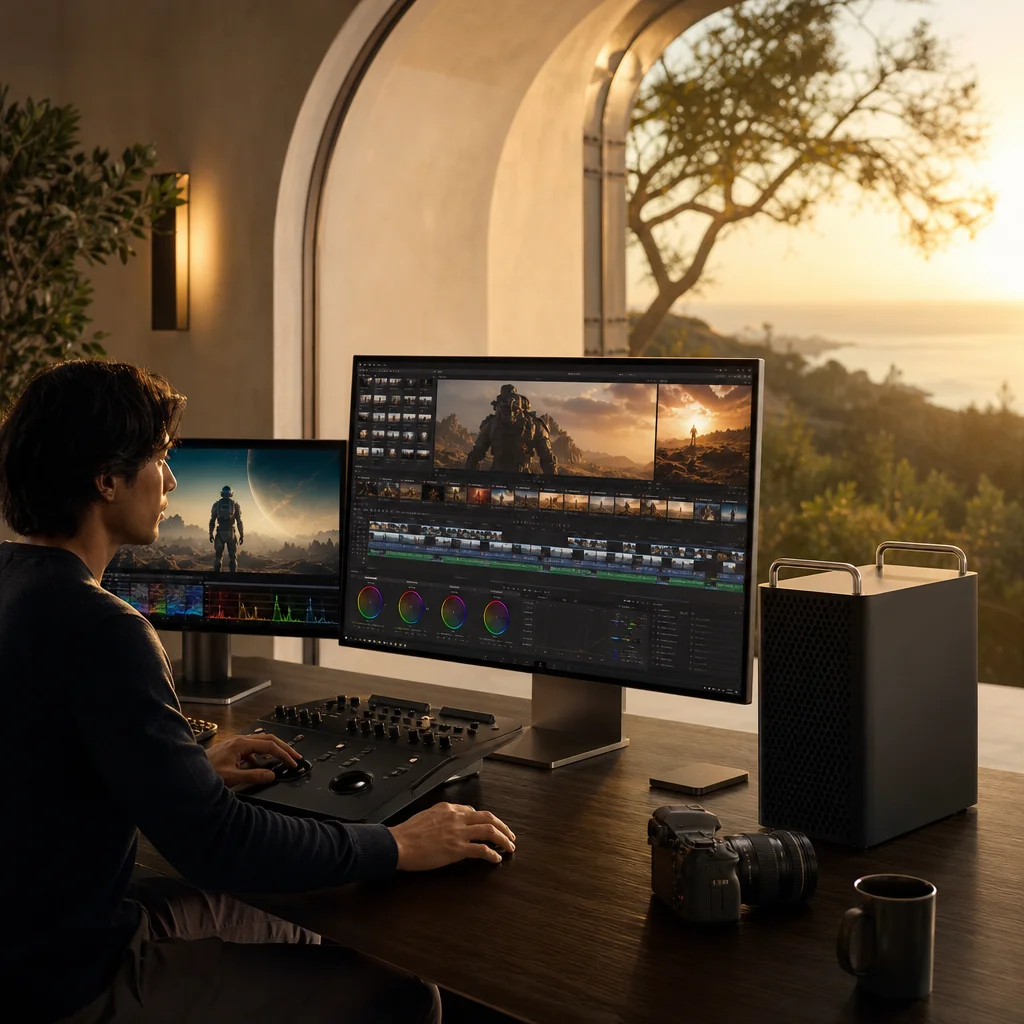
Timeline performance directly impacts creative confidence. When your system responds instantly to every adjustment, you experiment more freely and explore creative ideas you might otherwise skip. That freedom drives better creative outcomes.
What to do next: Load your most complex timeline on any system you're evaluating. Don't just test with a simple, clean project. Push it hard and see how responsiveness holds up.
5. Export Times and Media Engine Efficiency
Export times are the silent productivity killer that nobody talks about enough. An extra 30 percent on export time doesn't sound significant until you realize it's costing you three weeks across a year of projects.
We measure export efficiency by benchmarking actual media pipeline performance across H.264, H.265, ProRes, and proprietary formats at various resolutions and frame rates. The metric that matters most is how efficiently your system can read decoded media, apply final color corrections and effects, re-encode, and write to storage. This isn't just processor speed. It's memory bandwidth, cache efficiency, and media engine design.
Our approach to hardware encoding and the architecture of our media pipeline means export times that other systems simply can't match. When you export a one-hour 4K timeline that takes a competing system three hours, that's not an anomaly. That's the result of us architecting every component specifically for media workloads.
Many systems ship with underutilized media engines or rely entirely on software encoding, which is punishingly slow. We've designed dedicated hardware that handles encoding, decoding, and color processing with remarkable efficiency. The result is export times that feel almost impossibly fast until you realize the architecture was designed exactly for this purpose.
What to do next: Time actual exports on hardware you're considering. Bring your real files and your real export settings. That's the only number that matters.
6. Memory Bandwidth and Cache Architecture Impact
Memory bandwidth is where many systems fail silently. Your processor might have impressive specs, but if it can't move data fast enough from memory to the processor cores, you're bottlenecked by plumbing, not by processing power.
We benchmark memory system performance by measuring sustained bandwidth under realistic creative workloads, cache hit rates on typical editing and rendering operations, and latency characteristics during multi-threaded processing. These architectural fundamentals determine whether a fast processor actually feels fast in practice.
Our unified memory architecture gives CPU and GPU direct access to the same memory pool without wasteful duplication or transfer overhead. That's tremendously powerful for creative workflows because media data can be processed once, by multiple components, without being copied back and forth between system memory and GPU memory. Competing systems still rely on discrete GPUs with separate memory, which means copying data multiple times for every operation.
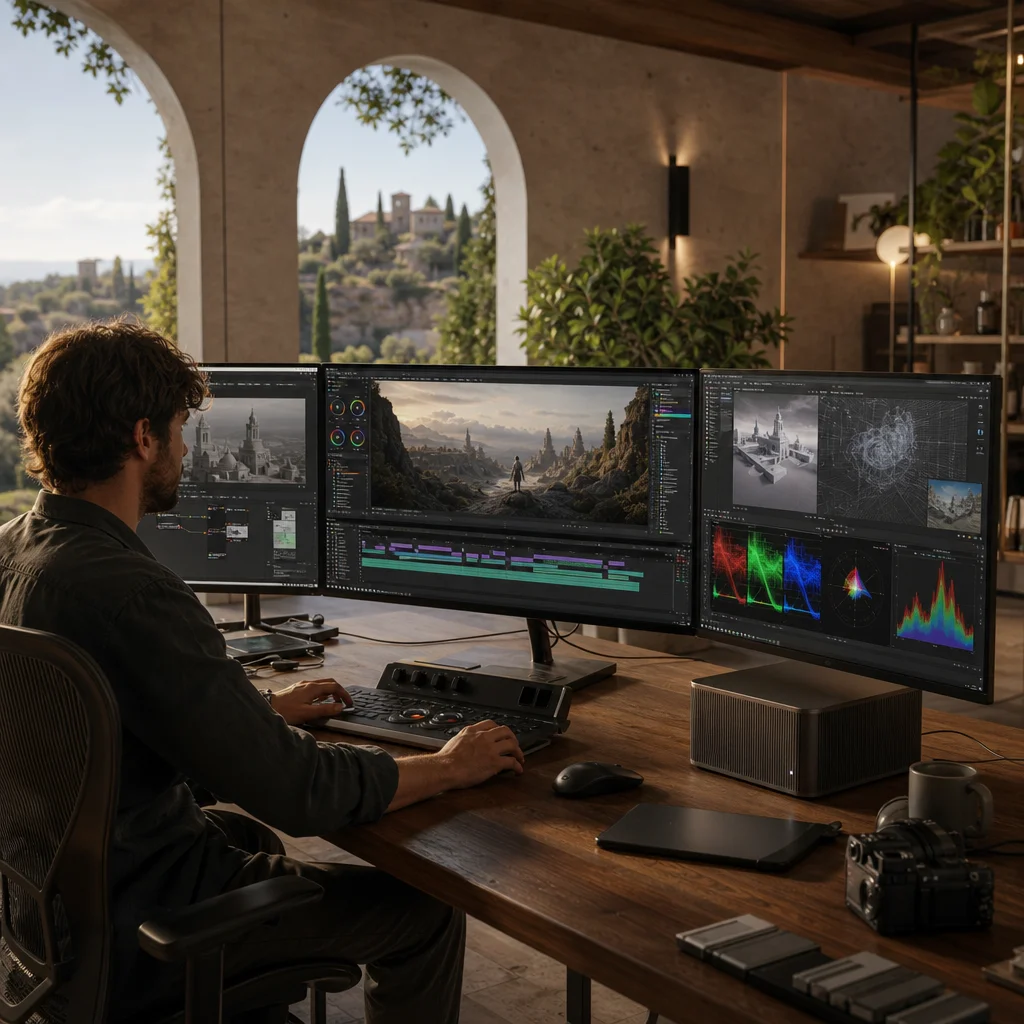
The performance difference is substantial and gets more pronounced as projects grow in complexity. You're essentially asking whether your hardware is designed for modern creative workloads or retrofitted from architectures built for different purposes.
What to do next: Ask vendors about their memory architecture and whether their GPU can directly access system memory. If they describe data copies between system and GPU memory, that's a red flag for creative workflows.
7. Thermal Performance Under Sustained Creative Workloads
Thermal performance is the benchmark that separates honest engineering from marketing fiction. A system that performs brilliantly for five minutes under peak load means absolutely nothing if it throttles after 20 minutes when you're rendering that overnight job.
We measure sustained thermal performance by running full-load rendering benchmarks for 4+ hours and tracking processor clock speed stability, temperature curves, and whether the system maintains peak performance throughout the test window. This is brutally honest testing because it exposes every weakness in cooling design and thermal management.
Our systems maintain clock speeds and performance consistency throughout extended creative sessions because we've invested in thermal architecture that works. Larger heat dissipation surfaces, intelligent thermal management, and engineering that prioritizes cooling over thinness means you get reliability and consistency.
Competing manufacturers often prioritize form factor over thermal competence, and you pay for it in throttling, reliability concerns, and shortened system lifespan. When you're rendering a job overnight or exporting a massive timeline, the last thing you want is wondering whether thermal issues will interrupt your work.
What to do next: Stress-test any system under realistic sustained loads. Watch temperatures and clock speeds over 4+ hours, not just 10-minute benchmark runs.
---
The benchmarks that matter in creative work are ruthlessly practical. They're about real-world performance on actual projects, sustained reliability under demanding conditions, and whether your hardware enables creative freedom or imposes limitations.
Our systems excel across all seven of these metrics because every component, from silicon architecture to thermal design, was engineered specifically for creative professionals. When you choose our platform, you're not settling for compromises or hoping vendors optimized for your workflow. You're investing in systems that were literally designed to help you create at your absolute best.
If you're serious about 4K editing, 3D rendering, or complex color grading, evaluate systems rigorously against these benchmarks. Run your actual projects. Push the hardware hard. When you do, you'll discover why leading creative studios worldwide depend on our platforms. We've earned that trust through relentless engineering focused on what truly matters: enabling your creative vision without compromise.